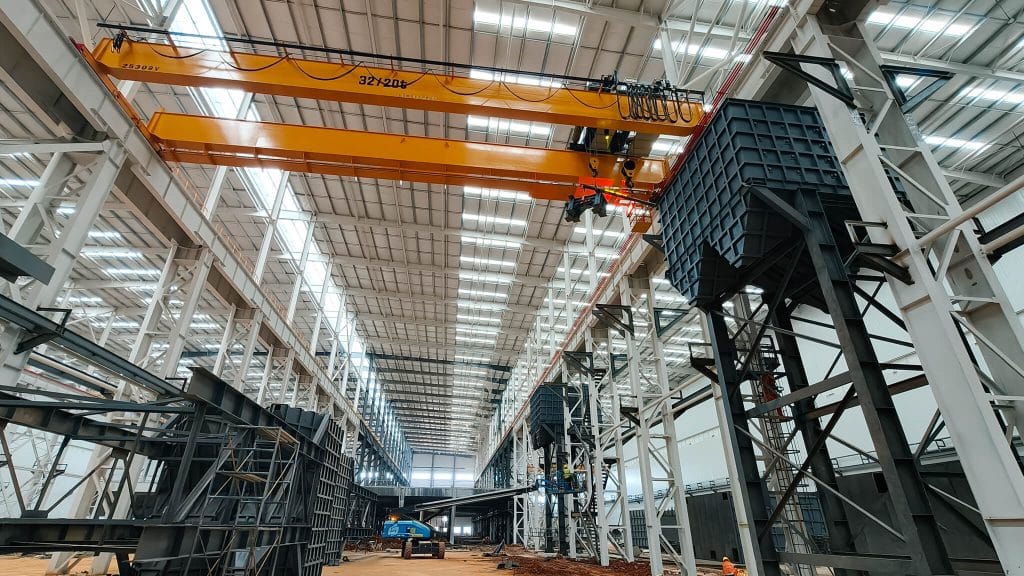
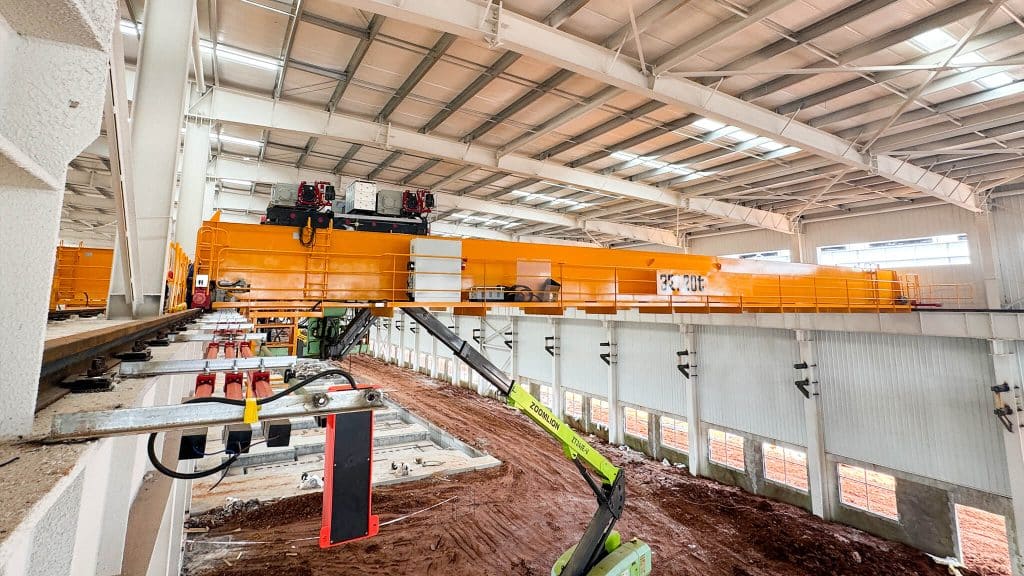
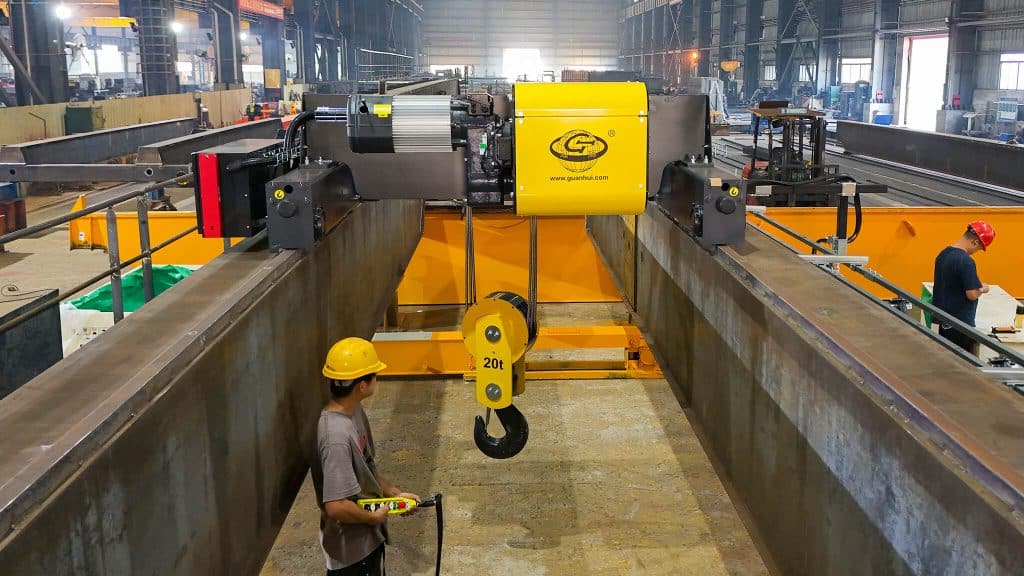
In the relentless environment of a high-volume papermill, downtime is the enemy and precision is paramount. The heavy lifting required to keep a paper machine running—from swapping out massive parent rolls to replacing felts and maintaining heavy Yankee cylinders—demands a highly specialized, heavy-duty lifting solution. While standard cranes handle basic lifts, a three-trolley overhead crane offers unparalleled flexibility for the complex maneuvering, turning, and positioning of oversized machine components.
The primary goals when specifying this equipment are maximizing reliability (because uptime is money), throughput, safety, and optimizing the lifecycle cost.
Whether you are upgrading your facility or building a greenfield mill, this comprehensive guide will walk you through the specifications, customization, installation, and maintenance required to engineer a crane tailored to your paper production.
System Requirements and Performance Targets
Load Capacity and Lifting Speed
Calculating the Safe Working Load (SWL) for a papermill crane requires looking beyond the parent roll. You must account for the heaviest component on your machine (like the central press roll or Yankee cylinder) plus the weight of any spreader beams or lifting tackle. Lifting speed is equally critical. You need fast lifting speeds to clear aisles quickly, combined with micro-speed capabilities (often down to millimeters per second) to safely lower precision components into tight machine tolerances.
Span, Hook Approach, and Runway Alignment
The crane’s span must clear the entire width of the paper machine, including maintenance walkways and drive-side components. Hook approach—how close the crane hook can get to the runway beams at the ends of the bridge—dictates how much floor space is actually usable. A highly optimized hook approach ensures you can reach equipment at the extreme edges of the building. Furthermore, tight runway alignment is critical; any skewing will cause premature wheel wear and jerky movements that compromise safety.
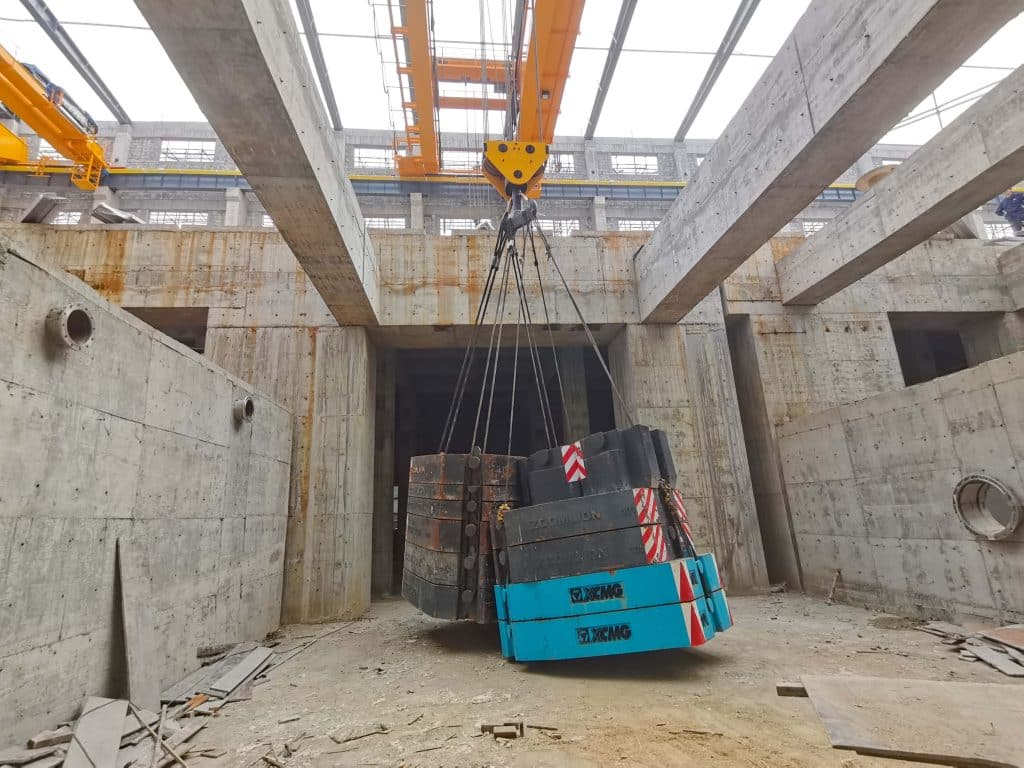
Environmental and Duty Cycle Considerations
Papermills operate 24/7, and the environment dictates the build.
The Wet End: Highly corrosive and humid. Requires moisture resistance and specific coatings.
The Dry End: Characterized by high heat and fine paper dust. Requires heat shielding and dust-proof enclosures.
Detailed Specification for Three-Trolley Configuration
Trolley Arrangement and Motion Control
Why three trolleys? Typically, two primary trolleys are used to lift a massive roll evenly using a spreader beam, while the third, smaller auxiliary trolley is used to safely rotate, pitch, or “turn” the roll into the correct orientation for maintenance. Specifying independent motion allows operators to use trolleys separately for smaller tasks, while synchronized motion control links the trolleys together to move as a single, perfectly balanced unit during tandem lifts.
Control System and Automation Interfaces
To handle million-dollar paper rolls safely, the crane needs a smart control system. Modern automation features should include:
Variable Frequency Drives (VFDs): For smooth, stepless acceleration and deceleration.
Sway Control: Uses algorithms to predict and eliminate load swing, allowing operators to move heavy rolls faster without waiting for the load to settle.
Target Positioning: Allows operators to program X-Y coordinates into the PLC. With the push of a button, the crane automatically travels to a specific drop-off zone.
Electrical, Pneumatic, and Safety Devices
Traditional hanging festoon cables can snag or degrade quickly in a mill. Opt for enclosed energy chains to protect power and control cables from dust and moisture. Safety devices must include overload limiters on all hoists, optical anti-collision sensors to prevent the trolleys from crashing into each other, and easily accessible emergency stop systems on both the radio remote and the backup pendant.
Customization Options for Papermill Needs
Material Handling and Gripper/Attachment Types
The crane is only as good as its grip on the load. Your below-the-hook attachments must be heavily customized:
Motorized Roll Grabs: Essential for picking up finished paper rolls safely without crushing the delicate paper layers.
C-Hooks and Spreader Beams: Necessary for balancing long, heavy machine rolls and preventing deflection during transport.
Core Probes: For handling specific types of parent rolls directly from the winder.
Wire Rope, Hoist Rating, and Gearbox Options
For the wet end, specify galvanized or heavily lubricated wire ropes with stainless steel fittings to resist corrosion. Hoists must feature redundant braking systems—if the primary motor brake fails, a secondary mechanical load brake must engage instantly. Gearboxes should be fully enclosed, oil-bath lubricated, and feature hardened gears to survive decades of continuous use.
Installation, Commissioning, and Integration
Site Preparation and Runway Installation
Before the crane arrives, the building’s structural steel must be assessed. The high dynamic forces of a three-trolley crane may require strengthening runway columns. Runway installation demands laser alignment; even a fraction of an inch of deviation across a long mill bay can lead to severe “crabbing” (the bridge walking crooked down the runway).
Alignment, Testing, and Commissioning Plan
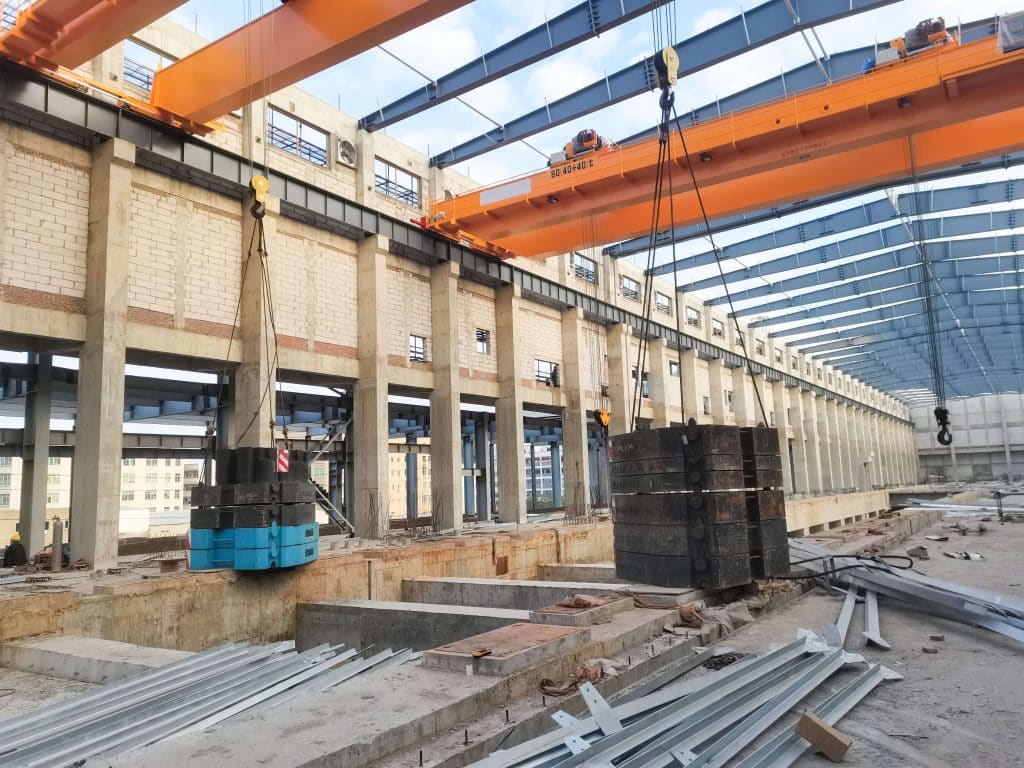
Commissioning is a rigorous, multi-step process. It includes:
No-load testing: Verifying all limit switches, drives, and trolley movements.
Partial and full-load testing: Ensuring the VFDs and brakes perform smoothly under weight.
Overload testing: Typically testing the crane at 125% of its rated capacity to ensure absolute structural and braking integrity.
Maintenance, Safety, and Operation Best Practices
Routine Maintenance Schedule
A reactive maintenance approach in a papermill results in catastrophic downtime. Implement a strict schedule:
Daily: Operator visual inspections of the wire rope, hook block, and basic motion checks.
Monthly: Lubrication of wire ropes and open gears; inspection of brake wear and VFD fault logs.
Annually: Comprehensive structural inspections, oil analysis on gearboxes, and verifying runway alignment.
Real-World Case Study: Guanhui’s Custom Solution for the Paper Industry
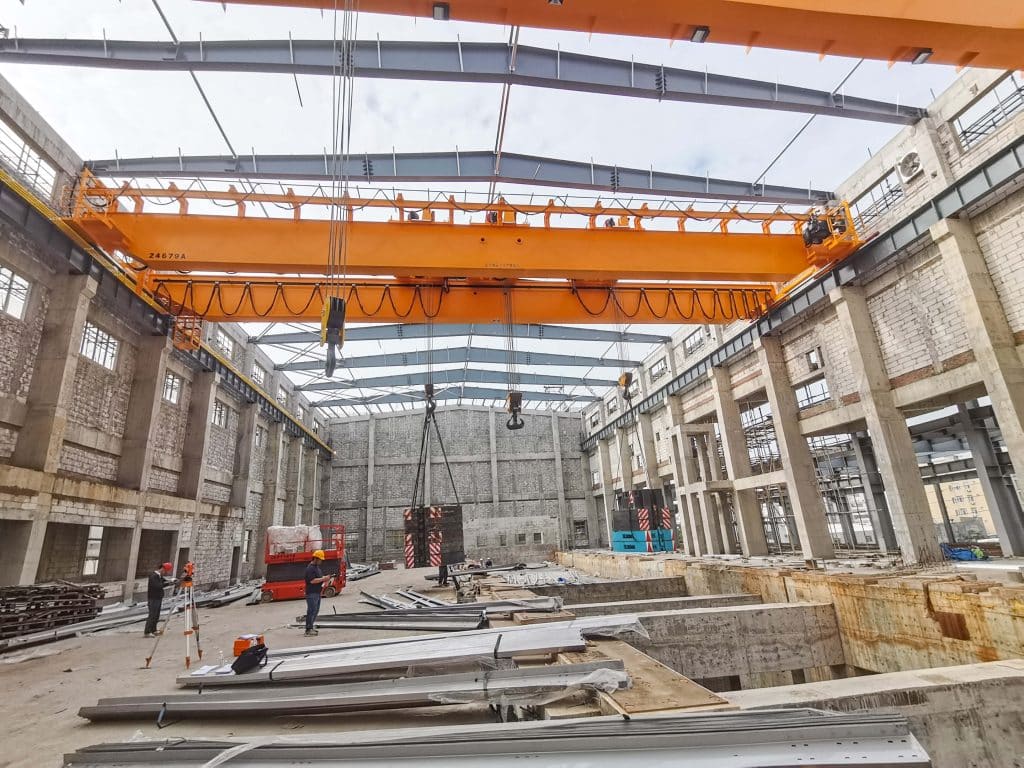
To see these specifications in action, look no further than our recent commissioning project. We successfully designed and commissioned a customized three-trolley overhead crane specifically engineered for the rigorous demands of paper industry operations.
A standout feature of this build is the strategic integration of a 5-ton auxiliary hoist on the side of the walking platform. This specific customization makes daily machine maintenance and material handling significantly more efficient and flexible for the mill operators without requiring the primary trolleys.
For cranes in the papermaking industry, we know that a successful project doesn’t start with steel—it starts with an accurate design and an in-depth analysis of the user’s operating environment and functional requirements. Leveraging decades of engineering expertise, Guanhui delivers a large number of tailor-made cranes for paper mills every year. Each solution is meticulously designed to match the actual production process and harsh operating environments, ensuring safety, reliability, and long-term performance.
To learn more about our customized heavy-duty lifting solutions for the paper industry, visit www.guanhui.com.
FAQs
What is the typical lead time for a three-trolley overhead crane for a papermill?
Because these are highly engineered, custom-built machines, you should expect a lead time of 3 to 9 months from the time the purchase order is signed to final commissioning. This includes the design engineering phase, manufacturing, factory acceptance testing, shipping, and installation.